
Buyer Guide · Private Label Manufacturing
What Really Determines Lead Time in Private Label Food Manufacturing?
Buyers often ask manufacturers how long production will take. In many private-label projects, however, production itself is not the critical path. The real constraint is usually how quickly the project becomes production-ready — through product confirmation, regulatory review, artwork, packaging and material preparation. A more useful question is therefore not only ‘How long does production take?’ but ‘What has to be ready, by when, to meet the required arrival date?’
This buyer guide is for private-label food buyers, sourcing managers, importers, distributors, food brands and retailers working backwards from a launch date or required arrival date.
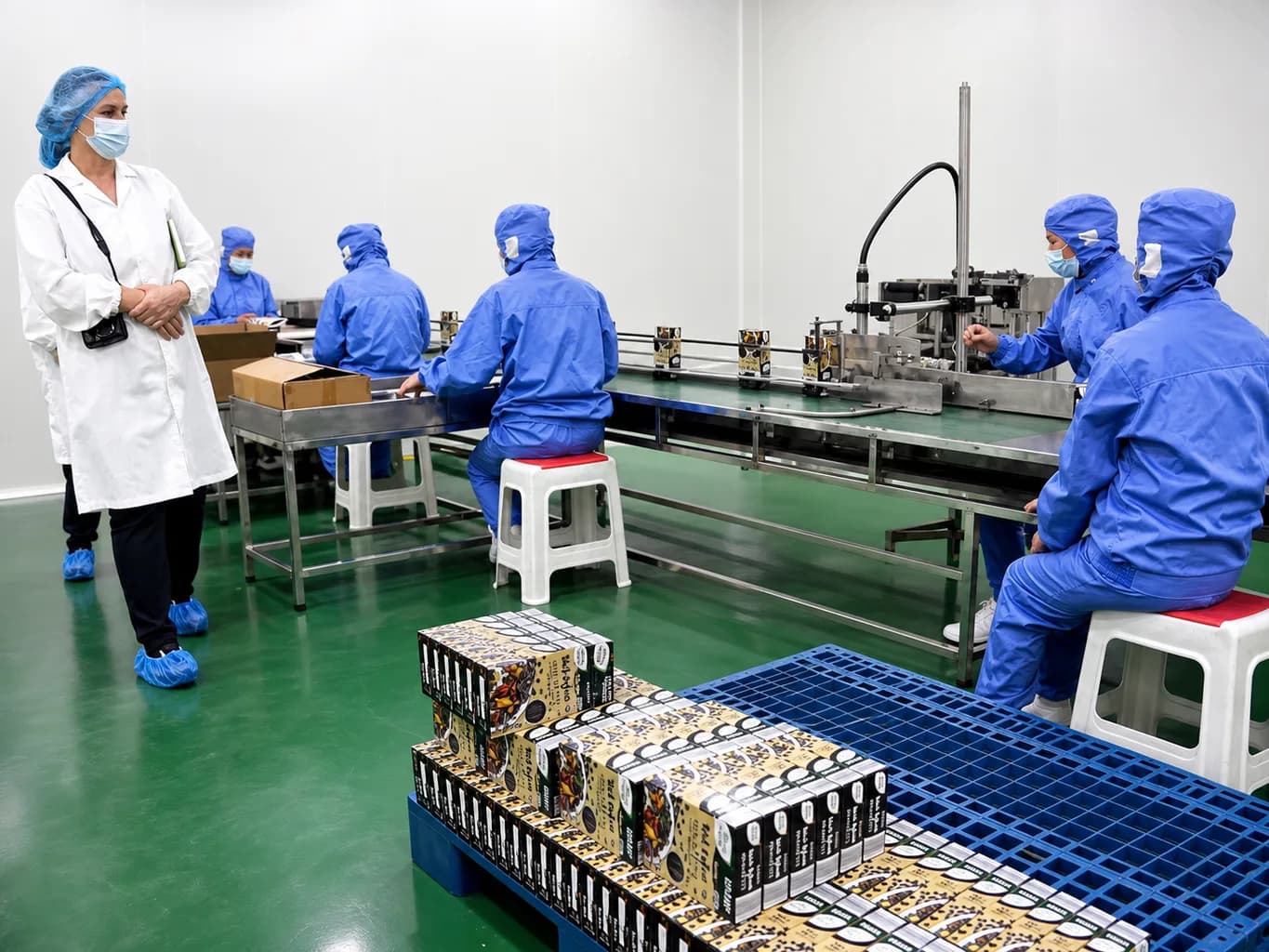
Who this guide is for
This guide is for buyers planning a first or repeat private-label food order and trying to understand the full commercial timeline before a purchase order is placed.
Why ‘Production Lead Time’ Can Be Misleading
A factory cannot necessarily begin production the moment a purchase order arrives. Before manufacturing can start, several conditions normally need to be locked:
Product formula / specification
the product definition is confirmed
Flavor or sensory target
the intended sensory direction is agreed where applicable
Packaging format
the pouch, carton, label, rollstock or other format is selected
Final artwork
the version approved for printing is ready
Regulatory information
required product and label information is confirmed
Certification requirements
applicable program requirements are identified
Raw materials
required inputs are available for the agreed specification
Printed packaging materials
packaging is ready for the manufacturing site
Production schedule
a production slot is confirmed against current capacity
Commercial lead time is best understood as the time required to reach production readiness, plus manufacturing, plus release and shipment preparation. Production is only one component of that total.
The five stages that determine lead time
A private-label project becomes easier to schedule when the buyer and manufacturer review readiness as a connected sequence.
- 01
Product readiness
Lock the product itself before downstream work begins.
- 02
Regulatory & certification readiness
Confirm market, label and program requirements early.
- 03
Packaging readiness
Select the format, confirm dimensions and print specifications, prepare and review artwork, complete required approvals and arrange printing and delivery of the packaging materials.
- 04
Material & scheduling readiness
Make sure raw materials and packaging materials are available, then confirm a production slot against current capacity.
- 05
Manufacturing & release
Proceed with the manufacturing run and subsequent release and shipment preparation once the previous stages are sufficiently complete.
1. Product readiness comes before production scheduling
This stage locks the product itself. Late product changes can force downstream work on artwork, packaging, materials and documentation to restart.
Formula confirmed
the proposed ingredient and product direction are agreed
Flavor or sensory target confirmed
the intended taste and relevant benchmark are clear
Format and pack weight confirmed
the product and commercial pack are defined
Reference sample approved
a benchmark or golden sample is approved where applicable
2. Regulatory and certification readiness
Requirements vary by destination market and program. Items that commonly need early confirmation include ingredient declaration, allergen and nutrition information, product claims, product naming, and any certification requirements, for example organic or gluten-free programs.
Certification-related steps can create dependencies that affect both timeline and documentation readiness. These should be identified early rather than discovered after packaging or production has already been planned.
Ingredient and allergen information
confirm the information that must appear on pack
Nutrition information
prepare the data required for the destination market
Claims and product name
review wording before artwork approval
Certification requirements
identify applicable program requirements at the start
3. Packaging readiness is often the longest first-order workstream
Packaging is often one of the longest pre-production workstreams in a first private-label order.
Typical steps may include selecting the packaging format, confirming dimensions, completing dielines or print specifications, preparing artwork, regulatory review of packaging text, artwork approval, printing setup, printing, delivery to the manufacturing site, and incoming inspection or production preparation.
Changing packaging late in the project can materially affect the schedule. Lead time also varies significantly by format. Generic or stock packaging, simple labels, printed cartons, pre-made pouches and printed rollstock each have different preparation and production cycles; they should not be assumed to share the same timeline.
Generic or stock packaging
may reduce custom print preparation, subject to the agreed format and labeling plan
Labels
require label dimensions, artwork and printing or application planning
Printed cartons
require carton dimensions, artwork, print setup and delivery
Pre-made pouches
require pouch specifications, artwork, printing and supplier capacity
Printed rollstock
requires film specification, artwork, print setup and material availability
Can packaging take longer than production?
In some projects, the actual food manufacturing run may take only a few days once all materials are ready. Custom packaging preparation can take considerably longer.
Illustrative examples only; actual timing depends on packaging type, artwork status, supplier capacity, print setup, order quantity and material availability.
Illustrative only
printed cartons may be around 10–14 days in some projects
Custom rollstock or stand-up pouches
preparation and printing may take several weeks
Packaging MOQ is a separate planning constraint
Custom packaging typically has its own minimum order quantity. This can influence project economics, first-order quantity, SKU planning, mixed-SKU programs and repeat-order planning.
In some cases, packaging MOQ becomes a more important commercial constraint than manufacturing MOQ. Buyers should factor this into early planning rather than treating it as a late-stage detail.
First private-label order vs repeat order
A first private-label order and a repeat order are operationally different. A first order creates the product, artwork, packaging and material baseline.
Repeat orders can often be shorter when specifications, packaging and materials remain unchanged. They are not automatically fast in every case.
| Stage | First Private-Label Order | Repeat Order |
|---|---|---|
| Product specification | Needs confirmation | Usually already locked |
| Formula / flavor | May require development | Usually unchanged |
| Artwork | Needs preparation and approval | Often reusable |
| Packaging | May require new printing/setup | Easier to forecast or reorder |
| Materials | Full preparation required | More predictable |
| Production | Scheduled after readiness | More straightforward |
| Overall lead time | Usually longer | Often shorter |
Working backwards from the required arrival date
A more useful input than a desired production date is the required arrival date or launch date at destination.
This approach helps expose schedule risks earlier and shifts the conversation from ‘When can you produce?’ to ‘What must be locked by when to meet the arrival date?’
- 01
Required arrival date
Start with the date the goods need to be available at destination.
- 02
Destination logistics / customs allowance
Allow for destination logistics and customs requirements.
- 03
Vessel departure / transport booking
Plan the transport booking against the required arrival date.
- 04
Cargo readiness date
Set the date by which production, release preparation and packing must be complete.
- 05
Production
Schedule manufacturing after the product, packaging and material dependencies are ready.
- 06
Packaging and material readiness
Allow time for packaging preparation, delivery, incoming inspection and raw-material preparation.
- 07
Artwork / regulatory approval
Complete the upstream approvals before committing to final printed materials and production.
- 08
Product approval
Confirm the product direction before the final critical-path commitments are made.
How can buyers shorten private-label lead time?
The biggest gains usually come from reducing waiting and rework before production, not from asking the factory to compress a manufacturing run that is already scheduled.
Confirm the packaging format early
do not postpone the pouch, carton or rollstock decision until product development is finished.
Share the target arrival date
give the manufacturer the date the goods are needed at destination, not only the desired production date.
Prepare artwork in parallel where possible
packaging artwork can progress while product validation is underway; final printing should still wait until mandatory information is confirmed.
Lock product specifications before printing
avoid changing formula, pack weight, flavor, product name, claims or nutrition information after artwork has entered printing.
Approve samples promptly
buyer-side approval time is part of the total project lead time.
Confirm certification requirements early.
Minimize late SKU changes
adding another SKU late can create additional artwork, packaging, material, production and certification work.
Forecast repeat orders where appropriate
packaging and material planning becomes more efficient when repeat demand is visible earlier.
Before production can start
Use this buyer-friendly checklist to test whether the project is genuinely production-ready.
Product specification approved
Formula / flavor approved
Pack weight confirmed
Packaging format confirmed
Artwork approved
Required regulatory information confirmed
Certification requirements confirmed
Raw materials available
Packaging materials available
Commercial terms / order confirmation completed
Production slot confirmed
Illustrative example: first private-label order
Illustrative only. Actual sequence and duration depend on product, packaging format, approvals, materials, certification and logistics. Compatible activities can run in parallel.
- 01
Product and specification confirmation
Confirm the product direction and agreed specification.
- 02
Artwork preparation and regulatory review
These activities can overlap with early packaging planning.
- 03
Custom packaging preparation and printing
Duration varies significantly by format; cartons are typically shorter than custom rollstock or pouches.
- 04
Final material readiness and production scheduling
Confirm the materials and production slot against the critical path.
- 05
Manufacturing run
Often much shorter than the total preparation period once everything is ready.
The overall preparation period for a first order is frequently measured in weeks rather than days. The exact length depends on how early packaging format, artwork, specifications and certification requirements are locked.
What can run in parallel?
Not every activity has to be sequential. Experienced project management can shorten overall lead time by running compatible activities in parallel while keeping the necessary dependencies intact.
Product validation + early artwork preparation
Certification review + packaging planning
Raw material planning + packaging procurement
Logistics planning + late-stage production preparation
What this means for a private-label buyer
A private-label food project connects product development, regulatory review, certification planning, packaging, materials, production and shipping. Looking at only the manufacturing run can hide the work that determines when the project is actually ready.
Waldesun approaches the conversation as a commercialization process: clarify the product requirement, identify the readiness dependencies, confirm what can run in parallel and then schedule production against the project’s target arrival date. The exact timing, documentation and commercial configuration remain confirmed by project.
Buyer FAQ
How long does private-label food manufacturing take?
There is no single timing for every project. Total commercial lead time includes product, regulatory, packaging and material readiness, manufacturing, release preparation and shipping arrangements. A first project may require several weeks of preparation even when the manufacturing run itself is relatively short.
Why does private-label packaging take so long?
Packaging can involve format selection, dimensions, dielines or print specifications, artwork, regulatory review, approval, print setup, printing, delivery and incoming inspection. The timing depends on the format, artwork status, supplier capacity, order quantity and material availability.
What needs to be completed before food production can begin?
The product specification, formula or flavor, pack weight, packaging format, artwork, regulatory information, certification requirements, raw materials, packaging materials, commercial order confirmation and production slot normally need to be confirmed.
Does a repeat order take less time than a first private-label order?
It can often be shorter when the specification, artwork, packaging and materials remain unchanged. Repeat orders are not automatically fast; availability, capacity, shipping and any requested changes still need to be confirmed.
How can a buyer reduce private-label manufacturing lead time?
Confirm the packaging format and target arrival date early, prepare artwork in parallel, lock product information before printing, approve samples promptly, confirm certification requirements early, minimize late SKU changes and forecast repeat demand where possible.
Should buyers plan from a production date or an arrival date?
Plan backwards from the required arrival or launch date. That approach makes destination logistics, transport booking, cargo readiness, production, packaging, material availability and approval dependencies visible earlier.
What is production readiness in private-label food manufacturing?
Production readiness is the point at which the product, documents, packaging, materials, commercial confirmation and schedule can support a real manufacturing run. It is broader than the factory’s manufacturing time alone.
How long can printed packaging take?
Printed cartons may take around 10–14 days in some projects, depending on the supplier and specification. This is an illustrative example only; actual timing depends on packaging type, artwork status, supplier capacity, print setup, order quantity and material availability. Custom rollstock and pouches follow different preparation and production cycles.
Need the private-label manufacturing context? View Private Label
Discuss Your Project Timeline
Share your target product, packaging format, required arrival date and any certification or regulatory requirements. Waldesun can help map the critical path from current readiness to production and identify which steps can run in parallel for your private-label program.